In short
- 40% of US desk workers in a 2025 survey said they had received "workslop" in the last month: AI work that looks finished but is not.
- Each case took almost two hours to deal with, and it damaged how people saw the sender.
- A three question check before sending stops most of it.
What workslop is
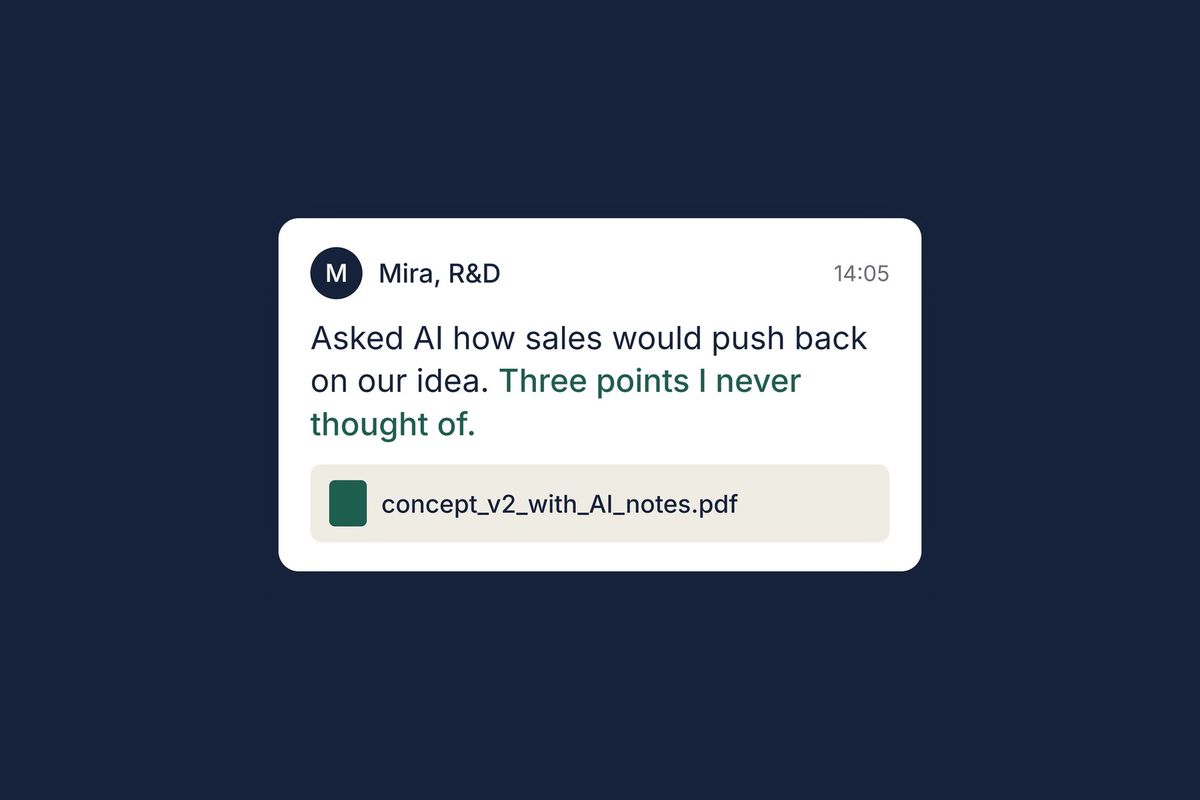
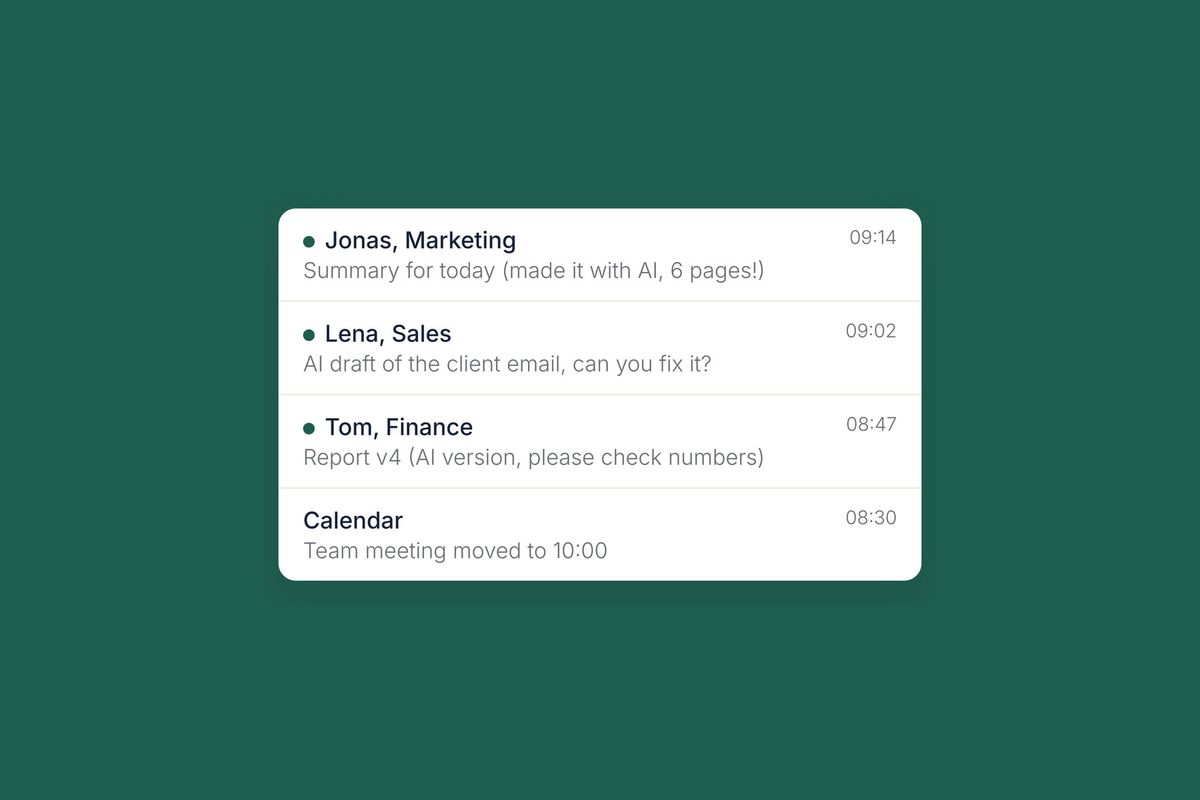
Researchers at the Stanford Social Media Lab and BetterUp Labs coined the word in 2025. Workslop is AI generated work that looks like good work but lacks the substance to move a task forward. The effort does not disappear. It moves from the sender to the receiver, who now has to decode, check, fix or redo it.
How common it is
Source: BetterUp Labs and Stanford Social Media Lab, 2025
In their survey of 1,150 full time US desk workers:
- 40% said they had received workslop in the last month.
- On average, people estimated that 15.4% of the work they receive is workslop.
- Managers were hit more often: 54% of managers reported receiving it, against 38.5% of individual contributors.
- It mostly travels sideways between peers (40%), but also up to managers (19%) and down from leaders to their teams (16%).
- And it is not only other people: 53% admitted that some of their own AI assisted work might be workslop.
Source: BetterUp Labs and Stanford Social Media Lab, 2025
Source: BetterUp Labs and Stanford Social Media Lab, 2025
What it costs
Each case took on average 1 hour and 51 minutes to deal with. Using people's own salary information, the researchers estimated an invisible cost of about $186 per employee per month, or over $9 million a year for a company of 10,000 people.
The bigger cost may be social. After receiving workslop, about half of people saw the sender as less creative, capable and reliable. 42% saw them as less trustworthy, and nearly one in three were less likely to want to work with that person again. In psychology terms, workslop spends trust, and trust is the resource teams run on.
Workslop spends trust, and trust is the resource teams run on.
Why people send it
Workslop is rarely laziness. Most organisations push people to "use AI more" without saying what good AI work looks like. When output is easy to produce and hard to check, the cheapest move is to send it on and let someone else find the gaps. That is a system problem, so it needs a team rule, not blame.
Try this tomorrow
- Before you send anything AI helped you write, ask three questions: Did I read all of it? Is it shorter than what I would have written myself? Could I defend every line if asked?
- Agree as a team that it is fine to send AI work back with one line: "Can you cut this to what you actually think?"
- Managers go first: never forward AI output to your team that you have not read yourself.
Honest limits
This is a self reported online survey of US desk workers, run by researchers partly linked to a coaching company. Time and money figures are estimates based on what people remembered and reported. It shows that the problem is common and costly, not exactly how large it is in your organisation.