In short
- In an eight month field study at a 200 person tech company, AI tools made work faster, broader and longer, often without anyone asking for it.
- Work psychology explains why: time saved is only a resource if someone decides what it is for. Otherwise it fills with new demands.
- The fix is not less AI. It is a shared team rule for what saved time is for.
What the researchers saw
Source: Ranganathan and Ye, 2026
Aruna Ranganathan and Xingqi Maggie Ye from UC Berkeley's Haas School of Business spent eight months inside a US technology company of about 200 people. They sat in meetings, talked to people informally and ran more than 40 interviews across teams. Their conclusion, published in Harvard Business Review in February 2026: AI tools did not reduce work, they consistently intensified it.
The intensification came in three forms:
- Expanded scope. People took on tasks that used to belong to someone else, or that nobody would have tried before. "My job" quietly grew.
- Eroded pauses. Prompting over lunch, before a meeting or in the evening removed the natural stopping points of the day.
- Parallel threads. People ran AI in the background while reviewing code, drafting documents or sitting in meetings. Some ran several AI agents at once.
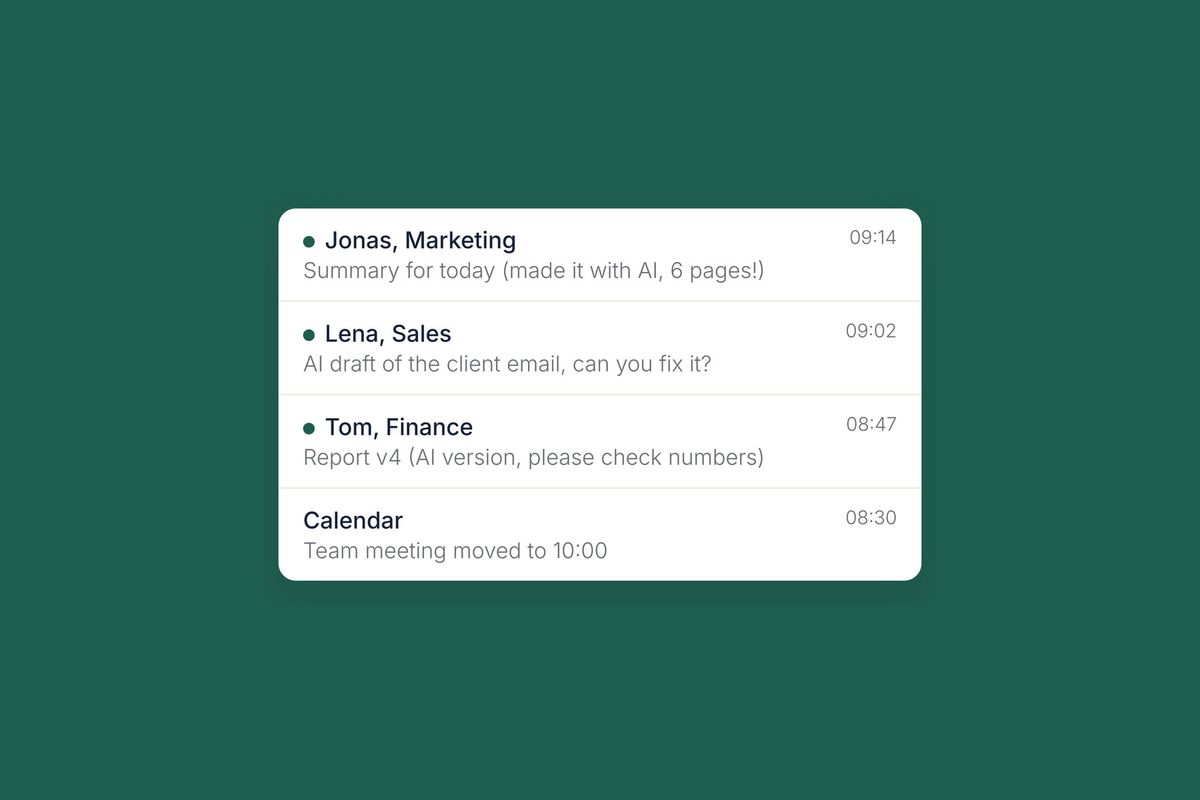
There was also a knock on effect. When some colleagues produced more with AI, others had to review more. Engineers, for example, ended up checking code that colleagues had generated quickly.
Why this happens: demands and resources
Work psychology has a well tested model for this. The Job Demands Resources model (Demerouti and colleagues, 2001) splits work into two piles. Demands cost energy: workload, time pressure, interruptions. Resources give energy back: control, support, feedback, recovery. Too many demands with too few resources is linked to burnout. Enough resources are linked to engagement.
AI can land on either side. Used to drop a task you dread, it is a resource. Used to take on more tasks, at more hours, in parallel, it is a demand. The tool is the same. What decides the outcome is what happens to the saved time.
And in most organisations, nobody has decided. In Gallup's May 2026 data, only 25% of US employees said their organisation had communicated a clear plan for integrating AI into current practices. Without a plan, saved time has no owner, and time without an owner fills up.
Source: Gallup AI in the workplace indicator, 2026
Saved time without an owner does not stay saved. It fills up.
What good teams do differently
The Berkeley researchers suggest an "AI practice": a few shared norms rather than a ban. Three of their ideas are easy to start with:
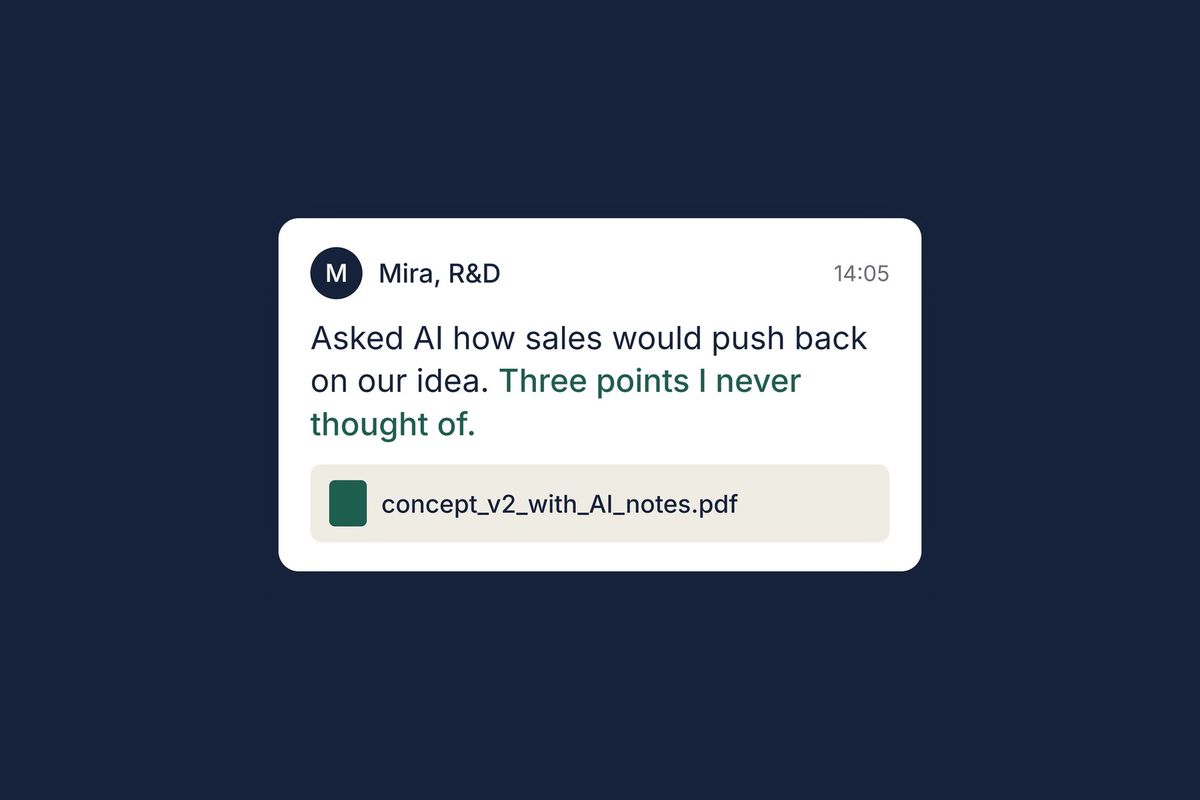
- Intentional pauses. A short, structured moment before a big decision to raise counterarguments and check it still fits the goal. Speed should not crowd out thinking.
- Sequencing. Batch non urgent updates and protect focus windows, instead of reacting to every AI output the moment it lands.
- Human grounding. Keep real check ins and shared reflection, so the work does not become entirely tool mediated.
Try this tomorrow
- In your next team meeting, ask: when AI saves us an hour, what is that hour for? Write the answer down.
- Protect one focus hour a week that AI is not allowed to fill.
- Watch for the three signs: tasks that used to be someone else's, work leaking into lunch and evenings, and more AI output to check.
Honest limits
This is one company, observed closely, and the authors call it research in progress. It shows how intensification happens, not how common it is everywhere. The demands and resources model is decades old and well tested, but its link to AI is our interpretation, not a finding of the study.
Sources
- Ranganathan, A., & Ye, X. M. (2026). AI doesn't reduce work, it intensifies it. Harvard Business Review, February 2026. source
- UC Berkeley Haas newsroom (2026). AI promised to free up workers' time. Researchers found the opposite. source
- Demerouti, E., Bakker, A. B., Nachreiner, F., & Schaufeli, W. B. (2001). The job demands resources model of burnout. Journal of Applied Psychology, 86(3), 499 to 512.
- Gallup (2026). AI in the workplace indicator, data as of May 2026. source